Family Guide

About your Kinder Kit
Engaging your child in play is a great way to support their learning and development. Parents, carers and families are the most important part of that journey.
Kinder Kits are filled with books, educational toys and activities made for your child and family to enjoy at home.
Each Kinder Kit includes items made especially for three-year-olds.
Victorian Early Years Learning and Development Framework
Early childhood teachers and educators support your child to grow and learn.
Kindergarten programs use the Victorian Early Years Learning and Development Framework (VEYLDF) to guide children’s learning and development.
Everything in your Kinder Kit connects with 1 or more of the outcomes in the VEYLDF.
- Identity
- Learning
- Community
- Communication
- Wellbeing
Backpack
Kinder Kit backpacks can be used every day to carry items and to play.
Your child can draw a picture on the cardboard tag at the back, so they know which backpack is theirs.
Unzip the backpack and stick the Velcro tabs down to use the felt surface for imaginative play.

- Tighten or loosen the backpack straps so that the bag is sitting on your child’s back.
- Create a story with the felt stickers.
- Encourage drawing on the name tag.
- Practise pre-writing skills.
Reading
Reading is a great way to spend time together as a family. It is one of the most important ways to support literacy development.
Sharing a regular story-time with your child helps develop their imagination and vocabulary.
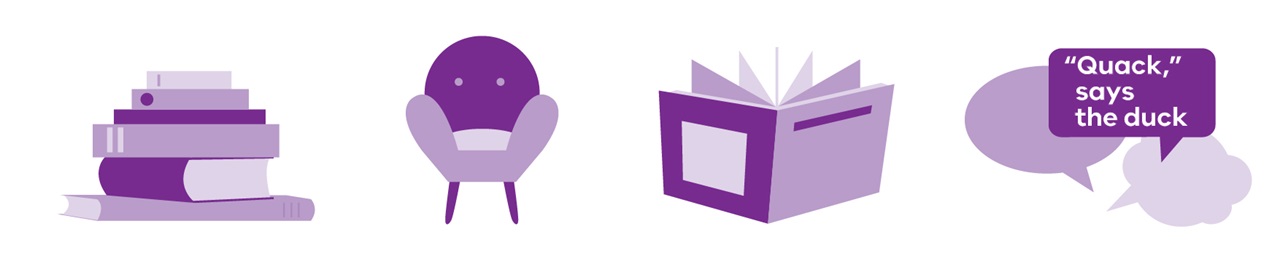
- Choose a book together.
- Find a cosy place to sit and read.
- Ask your child what might come next in the story.
- Read in different voices to match the characters.
Drawing and mark making
Drawing and mark making allow children to express themselves creatively and build confidence. By experimenting with crayons on paper, children:
- develop fine motor skills, which is important for learning how to write
- improve their hand-eye coordination
- learn about colours, shapes, patterns and lines
- express creativity
- communicate with others.

- Encourage your child to enjoy the process of drawing.
- Ask open questions to get your child talking about their drawing.
- Name colours and shapes that you see.
Creative activities
Creative play stimulates all 5 of your child's senses - sight, smell, hearing, touch and taste. It is a fun way to explore, discover and learn about the world around you.

- Encourage resilience by showing your child it’s okay to start again. If the blocks fall, take a few deep breaths and rebuild together.
- Try rolling the playdough into a ball, make shapes, flatten it, squish it.
- Make music together. Create different rhythms and beats by clapping your hands or tapping on items you have at home.
Outdoor play
Supervised outdoor play is a big part of growth, development and wellbeing for your child.
Children can:
- grow their understanding of science by observing nature
- gain a sense of independence
- socially interact with other children
- explore and learn how to make good choices when playing
- develop whole body movement, hand-eye coordination and fine motor and creativity skills.
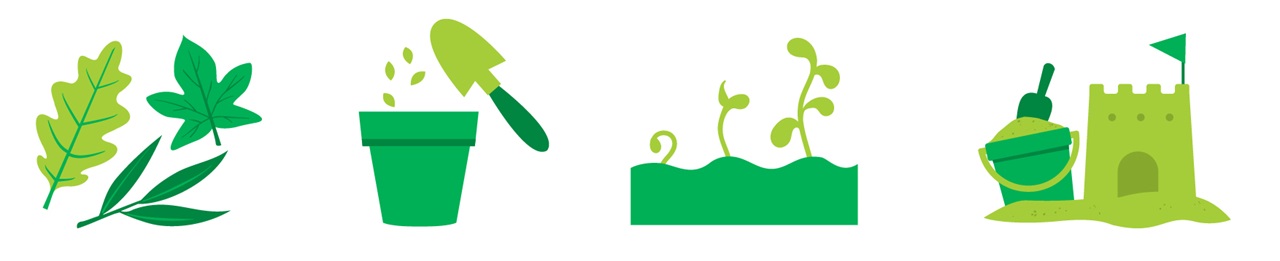
- Talk about leaves and name the different colours and shapes.
- Plant seeds together.
- Connect with nature. Talk about protecting our environment.
- Build sandcastles.
Dramatic play
Dramatic play encourages children to act out imaginary stories and take on the roles of other characters.
Children use dramatic play to practise important language and social skills, including:
- exploring and creating new worlds
- sharing and taking turns
- ways of interacting and negotiating with each other.

- Name the animals in English and other languages.
- Create characters.
- Make up stories.
- Use animals to explore and express feelings and different emotions.
Games
Playing games with family and friends is a great way to build your child's social skills.
Games can help children learn numeracy, language and problem solving skills.

- Learn game rules and practise taking turns.
- Strengthen problem solving and memory skills.
- Discuss numbers and practise counting with objects.
Building community
Play is how children discover and learn about themselves and the world around them. For children, play and learning go hand in hand. The items in your Kinder Kit support you to have conversations about diversity and different cultures.

- Talk to your child about other countries and their native animals.
- Look at a map of the world to see where different languages originate from.
If your family speaks a language other than English, access guides in your own language.
Respecting identity
Encouraging children to learn about all cultures builds understanding, acceptance and pride. Aboriginal and Torres Strait Islander cultures, and here in Victoria, Koorie cultures, are living and thriving today. We are proud to celebrate them as authors and artists in the Kits.
Here are some activities that help your child learn more about Koorie traditions and cultures:

- Learn Koorie symbols for objects or animals.
- Learn and talk about Koorie cultures, leaders and heroes.
- Discover the importance of an Acknowledgement of Country.
Visit the Victorian Aboriginal Education Association Inc. website for fun, engaging activities that explore Koorie traditions and cultures.
Books in Auslan
Auslan is the sign language used in Victoria's Early Childhood Language Program. This program is available in some Kindergartens.
There are many benefits to children learning another language at a young age, including:
- increased pre-reading and pre-writing skills
- improved flexible thinking
- boosted self-esteem and wellbeing
- strengthened cultural identity.
Many of the books included in the 2026 Kinder Kits have Auslan translations available.

- Express feelings through Auslan.
- Say hello in Auslan.
Child safety, wellbeing and extra support
Nothing is more important than the safety and wellbeing of children. Ask your service how they keep children safe.
All children learn differently and at their own pace. Talk to your early childhood teacher if you have any concerns. If you or your child need extra support, help is available through the following avenues:

- Make an appointment to see your doctor or Maternal and Child Health nurse to discuss your questions.
- Call Maternal and Child Health line on 13 22 29 for Victorian families with children from birth to 6 years, 24 hours a day, 7 days a week.
- Find out more about supports that may be available to your child.
- Find information child safety in early childhood services.
Careers in Early Childhood Education
Consider starting a career in Victoria's growing kindergarten sector. To support you to become an early childhood teacher or educator, there are:
- flexible study options
- generous scholarships
- financial incentives.
Find out more about starting a career in early childhood.
Donating your Kinder Kit
Once your child is finished with their Kinder Kit items, please dispose of them responsibly.
If items are in good condition, consider donating them to a charity. Ask yourself ‘would I give this to a friend?’. If the answer is yes, then it is appropriate to donate to charity.
If your items are not appropriate to donate, please recycle them where possible.
Reducing and disposing of waste properly helps build a cleaner, greener Victoria.

Updated